Custom water systems built around your process and facility.
PPT engineers and manufactures high-purity water systems, bringing treatment, equipment layout, distribution and controls into one coordinated design. We work through your application and facility requirements, from the first drawings through startup and ongoing support.
When your application calls for more engineering.
Use these requirements to identify where a standard platform needs a different layout, treatment arrangement or infrastructure interface.
- Space and access
- Fit equipment around floor space, ceiling height, doorways and the access needed to install and maintain it.
- Existing infrastructure
- Work with utilities, piping and equipment that must remain in place, including connections to an operating facility.
- Storage and distribution
- Plan water delivery across multiple points of use, rooms, floors or buildings, with storage and recirculation sized to your application.
- Changing demand
- Account for usage patterns and future tie-ins or capacity increases, with expansion provisions where practical.
- Institutional requirements
- Address specified materials, approved components and documentation requirements as part of the design scope.
- Operation and integration
- Define how operators will monitor the system, respond to alarms and connect it to facility monitoring.
The complete water system. Engineered to work together.
How water is generated, stored, delivered and monitored shapes the whole installation. PPT develops these elements together, with operation and service access considered from the start.
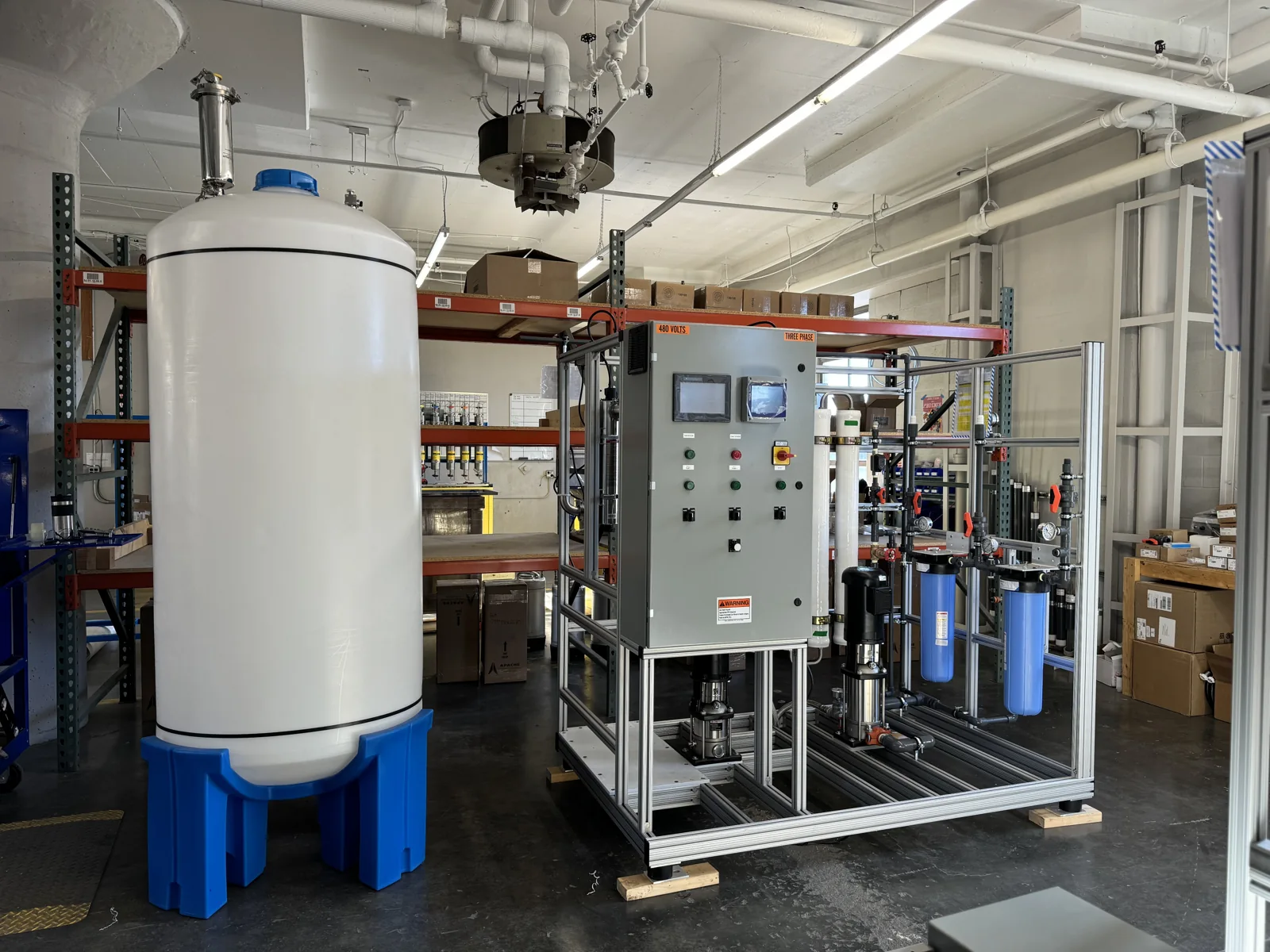
RO and RO/DI generation
Configure treatment around feedwater conditions, daily use, peak demand and the required water quality. Generation capacity is considered alongside storage and distribution, so the equipment supports how your facility actually uses water.
Storage, recirculation and distribution
Engineer tank capacity, recirculation and distribution pumps, and loop arrangements for the points of use. Equipment placement and piping routes are considered together to support delivery through your facility.
Polishing and final treatment
Integrate DI polishing, UV, ultrafiltration and final filtration where your application requires them. Locate treatment stages, sample points and instruments to support water-quality verification and routine troubleshooting.
Controls and system integration
Use PLC-based controls and HMI interfaces to make system status, monitoring and alarms accessible to operators. Optional BMS integration can support facility monitoring, trending and alerts, with the scope defined for the project.
Two water streams.
One coordinated treatment approach.
The requirement
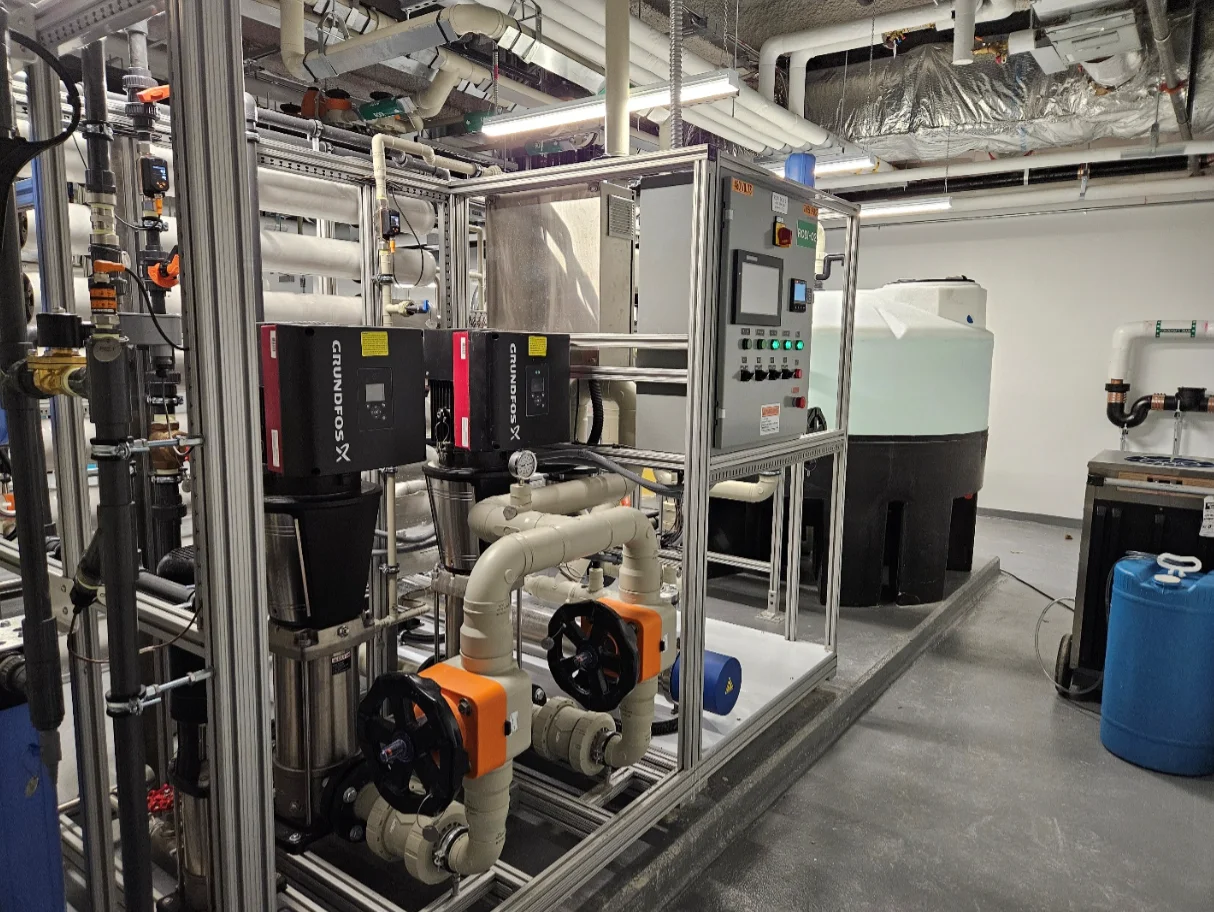
A new therapeutics facility needed both ASTM Type IA and Type II water streams. The project called for an approach that supplied both without unnecessary duplication of treatment equipment.
The engineering approach
PPT worked with the project engineer to use the Type II skid as feed to the Type IA skid. The connected SkidSpec arrangement avoided separate RO make-up equipment for each stream.
From requirements through startup.
Engineering and manufacturing stay connected through the project. Define the deliverables, testing and installation support with PPT so the handover reflects the system and the team operating it.
Define requirements
Review your application, water quality, feedwater, demand and site conditions. Establish the available space, utilities, access, budget and schedule.
Engineer and coordinate
Develop system architecture, P&IDs, general arrangement drawings and skid layouts. Select components and define the control sequence with the project team.
Fabricate and test
PPT technicians fabricate and assemble the equipment. Functional or wet testing is performed where applicable; factory acceptance testing is included when required by the agreed scope.
Startup and ongoing support
Coordinate installation requirements and the agreed startup and commissioning assistance. Operator training, preventive maintenance, service and spare parts support can continue through operation.
Have a water-system requirement? Start with what you know.
Share your defined requirements and the information you have. PPT can review the system scope and help identify what still needs to be resolved. Complete engineering drawings are not required to begin the conversation.
Useful information to bring
Application and demand
- Required water quality and application
- Estimated demand and usage patterns
Facility and installation
- Drawings or room layouts, if available
- Existing utilities and infrastructure
- Available space and equipment access
Delivery and operation
- Distribution and points of use
- Controls and building integration needs
Bring your water-system requirements to PPT.
Review a defined scope with our team, or talk through your application before the design takes shape.