Put RO reject water to better use.
ReClaim captures and redistributes RO reject water to approved non-potable fixtures. Give water that would otherwise go to drain a dedicated path to toilet flushing and slop sinks, with separation from potable and process-water systems.
A reject stream. A possible facility resource.
High-purity RO/DI systems produce a reject-water stream that is commonly sent to drain. Some facilities have opportunities—or project-specific utility requirements—to reuse part of that stream for appropriate non-potable purposes.
ReClaim provides a separate collection and distribution system for that use. The volume diverted from sewer discharge depends on available reject water, actual fixture demand, system operation and permitted reuse.
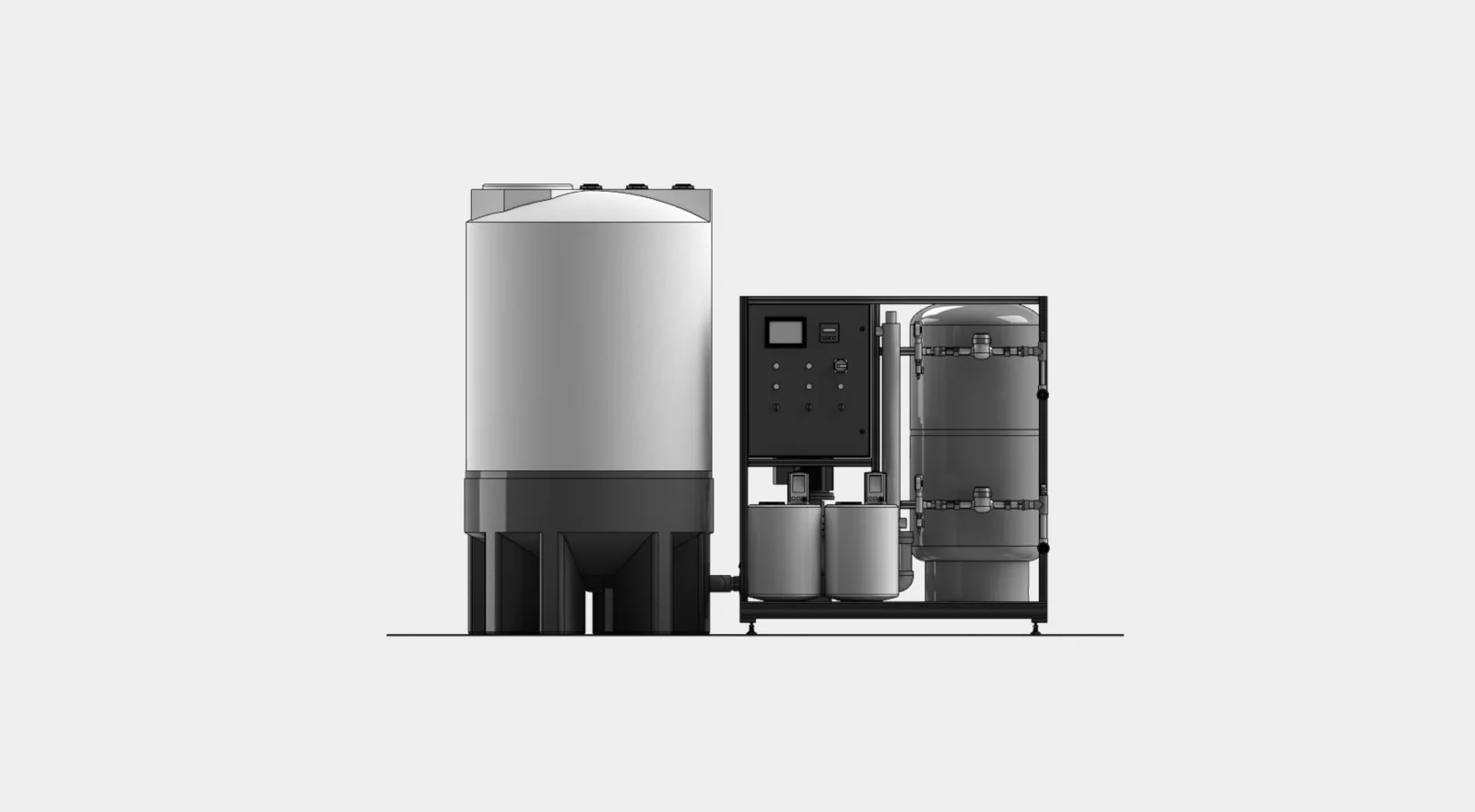
Two streams. Separate destinations.
The high-purity product-water stream stays with its intended application. ReClaim collects the reject stream for controlled, non-potable reuse.
Scroll across the illustration to explore the system.
Open full-size illustration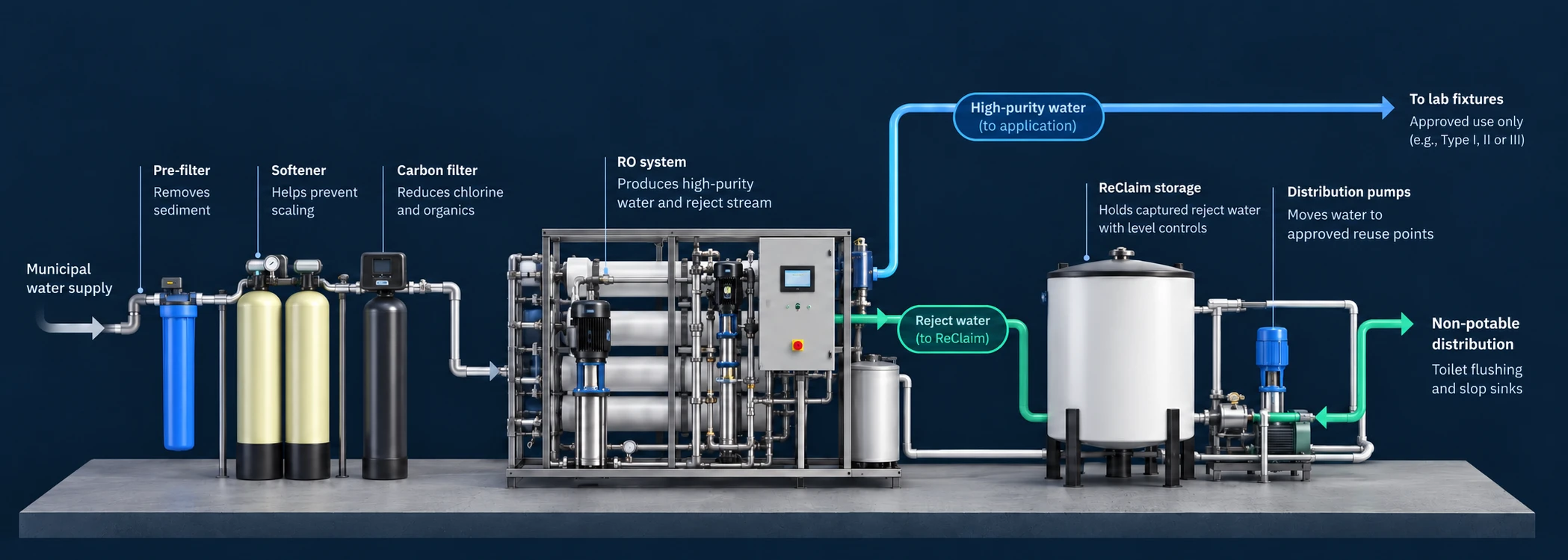
Diversion to drain when operating criteria are not met.
Designed for safe separation.
Collection is only one part of reuse. The engineering must keep destinations, connections and operating conditions controlled throughout your facility.
Keep utilities physically separate
Dedicated non-potable distribution remains segregated from potable and process-water networks. Backflow and cross-connection prevention strategies follow site standards and authority requirements.
Control the routing
Interlocks restrict distribution to approved fixtures. Level, flow and system-status alarms provide operating visibility; fail-safe diversion sends water to drain when operating criteria are not met.
Make identification unambiguous
Non-potable piping, signage and fixture identification distinguish the reuse system during operation, maintenance and inspection. The approved design defines the required labeling.
Where reclaimed water can be used.
The published ReClaim design serves two non-potable destinations. Actual permitted reuse depends on the project’s approved design and the applicable authorities.
Toilet flushing.
Slop sinks.
Dedicated non-potable fixtures identified and connected in accordance with the approved design.
Not suitable for
- Drinking water or handwashing
- Eyewash stations or emergency showers
- Laboratory testing or process water
- Equipment rinsing or food contact
Other uses require explicit project-specific authority approval and are not presented as generally permitted applications.
Review the building as well as the equipment.
A workable reuse design connects the available water, fixture demand and building infrastructure. Utility and authority requirements need to be understood before equipment is finalized.
For sites within MWRA jurisdiction, confirm whether any reuse directive applies directly with MWRA and the project team. Final compliance determinations and approvals rest with the applicable authorities.
Balance supply with fixture demand
Assess available reject-water volume and discharge characteristics against toilet and slop-sink demand. Storage and pump sizing follow the actual operating profile.
Coordinate the building connections
Review the existing RO/DI system, utilities, equipment space and distribution routes. Define controls, alarm points and any BMS/SCADA monitoring or reporting scope.
Resolve approval requirements early
Confirm applicable reuse, backflow and cross-connection requirements with the utility and authority having jurisdiction (AHJ). Approval drawings, submittals and turnover documentation support project review.
The technical scope starts with the site.
There is no universal flow rate, tank capacity or footprint. ReClaim is configured around the reject profile, fixture demand, integration scope and authority requirements.
Source & destinations
- Source water
- RO reject (concentrate) from a high-purity RO/DI system
- Water classification
- Non-potable reuse water
- Design endpoints
- Toilet flushing and slop sinks, subject to project approval
Storage & pumping
- Design flow
- Project-specific; sized to reject profile and fixture demand
- Equipment
- Configured storage tank and pump set with level control and interlocks
Controls & monitoring
- Interface
- PLC or panel interface
- Alarms
- Level, flow and system status
- Diversion
- Fail-safe bypass to drain when operating criteria are not met
- Optional facility visibility
- BMS/SCADA monitoring and reporting; metering and totalization where required
Integration & approval
- Interfaces
- RO/DI equipment and building utilities; dedicated non-potable fixture distribution
- Documentation
- Project-specific approval drawings, submittals and turnover package for AHJ review
- Final configuration
- Determined with project requirements and the applicable authorities
Could your facility put RO reject water to use?
Bring the information you have about your current system and building. PPT can review the reuse opportunity, identify integration questions and outline what needs to be resolved with the project team and applicable authorities.
Useful information to share
- Current RO/DI system and operating schedule
- Reject-water generation and discharge characteristics
- Existing plumbing, fixtures and demand
- Facility layout, utilities and distribution routes
- Known reuse requirements and authority correspondence
Bring your water system requirements to PPT.
Have drawings, specifications or a defined equipment schedule? Send them for a Spec Review. For an open application question, talk with the team.