Articles &
technical guidance.
Water treatment, solvent handling and the decisions behind a well-planned purification system.
Latest articles
All resources
Why Does an RO/DI Water System Need Pretreatment?
Hardness, sediment and disinfectants can affect treatment stages before water reaches an RO membrane or DI resin. This article explains how feedwater analysis guides pretreatment selection.
Read article
Can Your Existing Water Purification System Handle Increased Demand?
New equipment and additional users can outgrow a system that still operates normally. Compare daily consumption, peak demand, production capacity and storage before deciding what needs to change.
Read article
Why Is My RO/DI Water System Losing Water Quality? 8 Common Causes
Rising conductivity or falling resistivity can have several causes, from exhausted DI resin to membrane and distribution problems. Eight troubleshooting areas help organize the investigation.
Read article
Lab Water Purification Systems for Academic Research Facilities
University facilities often serve several departments with different water-quality targets and changing demand. Review central supply, point-of-use polishing, space constraints and support needs across a research campus.
Read article
Water Purification Systems for Biotech Labs: How to Choose the Right System
Research and production workflows can place different demands on a biotech water system. Match water quality, storage, distribution and sanitization requirements to the applications the facility will support.
Read article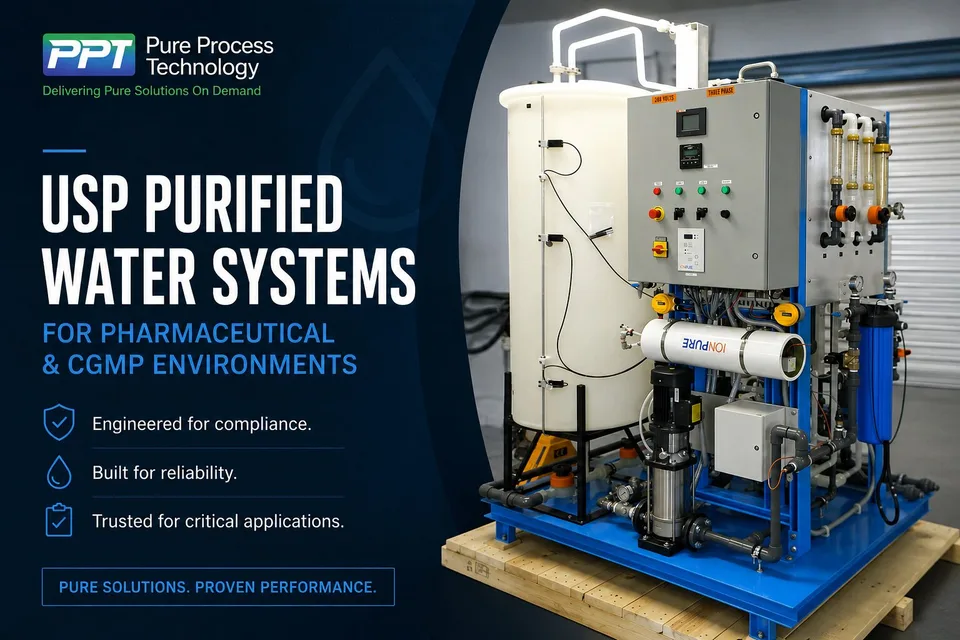
USP Purified Water Systems for Pharmaceutical and cGMP Environments
USP Purified Water requirements involve more than a conductivity target. Review how sanitary design, monitoring, documentation and qualification considerations shape systems for pharmaceutical and cGMP environments.
Read article
What Water Quality Does a Laboratory Glassware Washer Need?
Final-rinse water can affect the residue left on laboratory glassware. Compare RO and DI treatment considerations alongside the washer manufacturer’s water-quality, pressure and flow requirements.
Read article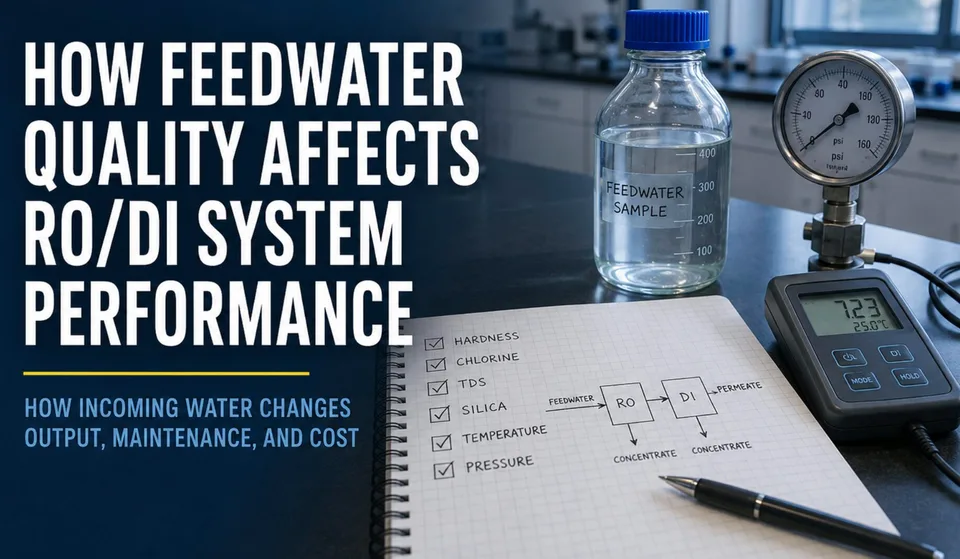
How Feedwater Quality Affects RO/DI System Performance
Temperature, hardness, dissolved solids and disinfectants can change how an RO/DI system performs. Understand why feedwater conditions influence membrane output, pretreatment needs and DI consumption.
Read article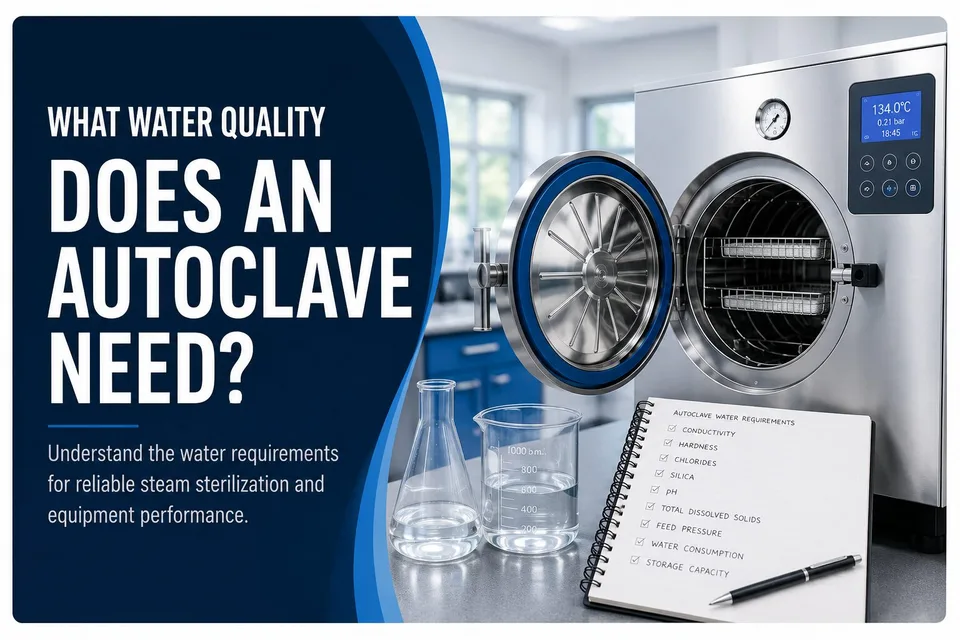
What Water Quality Does an Autoclave Need?
Autoclave water requirements depend on the equipment and its steam-generation design. Consider mineral deposits, corrosion and the manufacturer’s specifications before selecting tap, RO or DI water.
Read article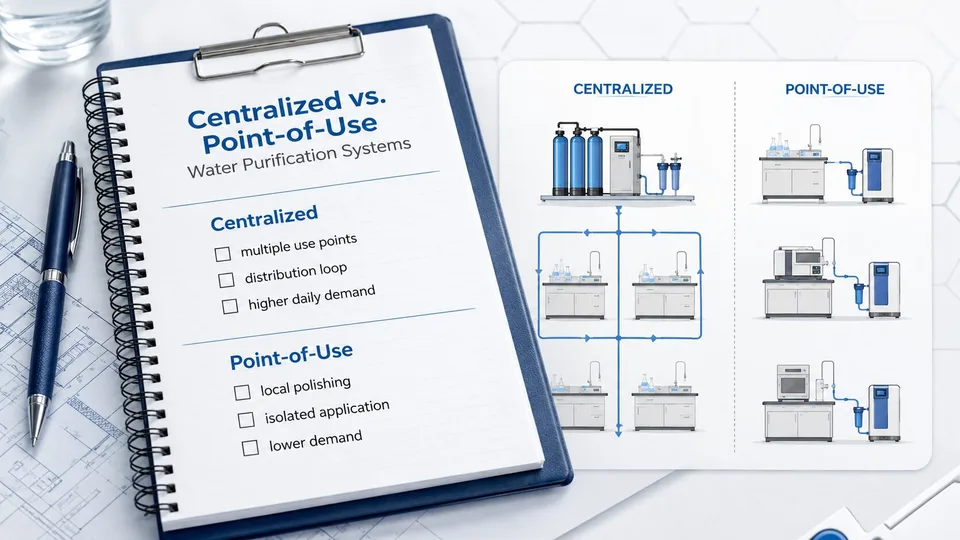
Centralized vs. Point-of-Use Water Purification Systems
Centralized supply and point-of-use purification solve different facility problems—and can work together. Compare demand, distribution, service access and application-specific polishing when planning the layout.
Read article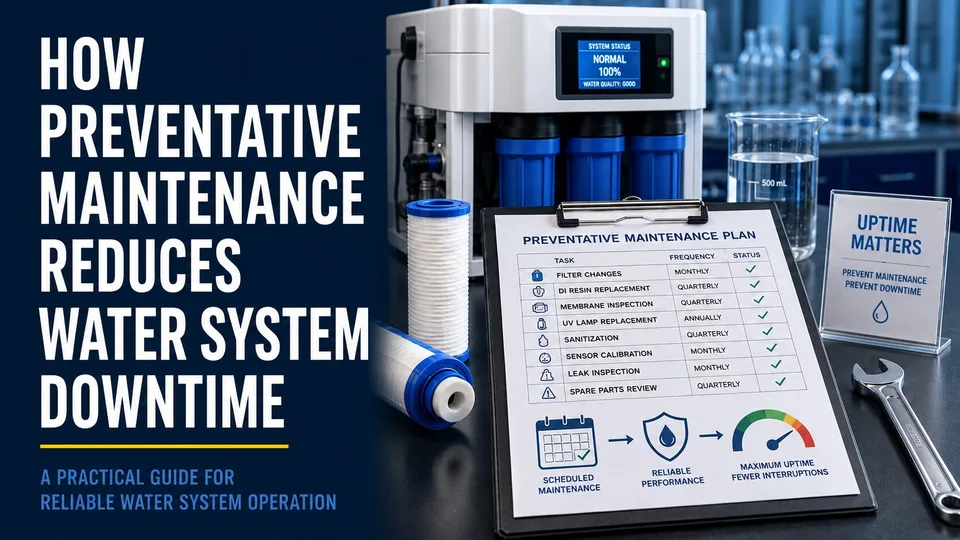
How Preventative Maintenance Reduces Water System Downtime
Changes in flow, water quality and component behavior can reveal problems before a system stops. Scheduled service, maintenance records and spare-parts planning help make interruptions more manageable.
Read article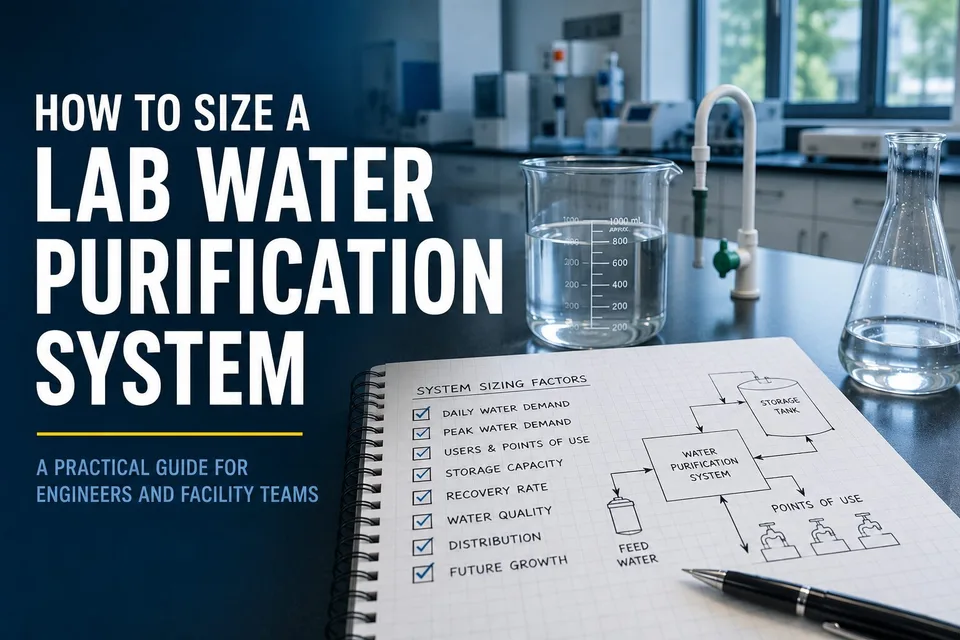
How to Size a Lab Water Purification System
Daily water use alone does not determine system size. Bring peak draws, production recovery, storage volume and distribution distance together to plan for the way a lab actually operates.
Read article